
What’s in this article
- What Claude Design System Import is — How the AI now builds with your brand’s real components.
- The `design-system-spec.json` file — A copy-paste asset to connect your GitHub repo to Claude.
- How to connect your design system — The 4-step workflow from repo prep to code sync.
- What this changes for agencies — How this kills the manual design-to-code rebuild process.
- FAQ — Your questions on plans, private repos, and developer roles answered.
🚀 Plug this into Claude Code or Claude Desktop
This spec contains the `design-system-spec.json` template and a step-by-step checklist for prepping your GitHub repository. Drop it into Claude Code to have it guide you through connecting your design system and running your first sync.
Get stuck? Join the Talk-to-Build community for weekly office hours and help applying this to your own stack.
You just spent a week perfecting a new homepage design. Now comes the worst part: rebuilding the whole thing, component by component, in code. Anthropic just fixed that. In June 2026, Claude Design shipped an update that lets it import your entire design system from a GitHub repo.
This post gives you the exact file and workflow to connect your components and turn design handoffs into a one-command sync. This is how you stop rebuilding and start shipping.
What is Claude Design System Import?
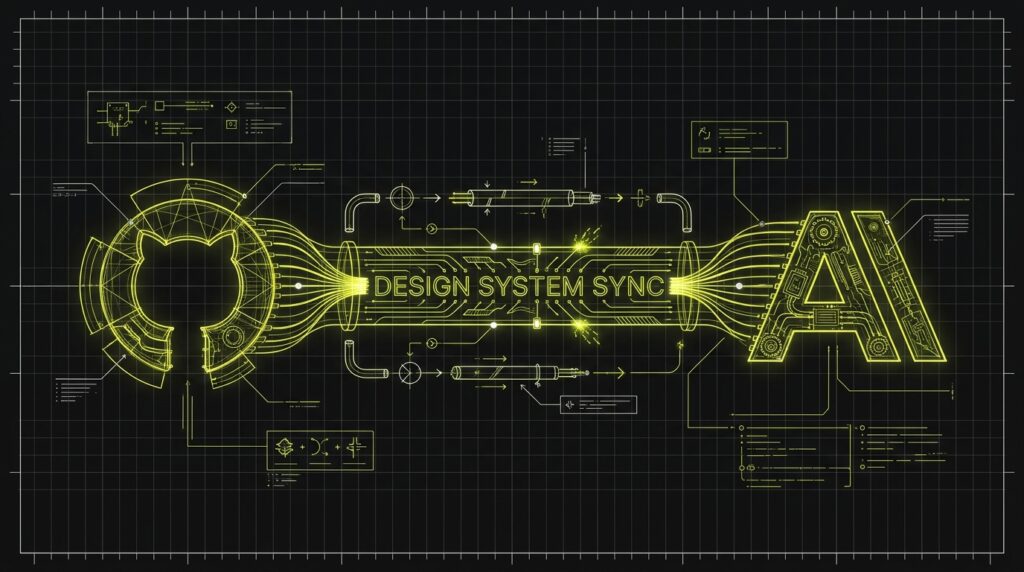
Claude Design System Import is a feature that connects the AI design tool to a code repository containing a brand’s component library. It allows Claude to build new designs using a team’s existing, approved UI components, colors, and fonts. This ensures brand consistency and automates the translation of design into code.
Instead of guessing at styles or generating generic elements, Claude reads your actual component code. When you ask for a “primary button,” you get *your* primary button, straight from your repo. This fixes the biggest time-waster in AI-assisted web design: the manual rebuild from a static image to a live component.
The `design-system-spec.json` You Can Copy
This `design-system-spec.json` file is a manifest you place in the root of your design system’s GitHub repository. It tells Claude Design where to find your components, color palettes, and typography rules, acting as a map for the AI to understand and use your brand’s visual language correctly.
{
  "schemaVersion": "1.0",
  "systemName": "MK-Way Design System",
  "repositoryUrl": "https://github.com/mk-way/design-system-core",
  "paths": {
    "tokens": "/tokens/design-tokens.json",
    "components": "/components/",
    "assets": "/assets/icons/"
  },
  "componentManifest": "/components/manifest.json",
  "framework": "react"
}
Drop this file in your project’s root. The `repositoryUrl` should point to your public repo. The `paths` object tells Claude where to look for your design tokens (colors, fonts), individual component files, and SVG assets. The `framework` key helps Claude generate the correct code syntax when it builds.
[GitHub Repo] ---> [design-system-spec.json] ---> [Claude Design]
    |                      (The Map)                  (The Builder)
    |                                                      |
    +------------------------------------------------------+
                  (Builds with YOUR components)
Here’s exactly how I’d connect a design system
To connect your design system, first create and commit a `design-system-spec.json` file to your component library’s GitHub repository root. Then, inside Claude Design, use the import feature to provide your public repo URL. Once connected, you can build designs and use the `/design-sync` command to push the final result to Claude Code.
- Prep Your GitHub Repo. Make sure your components are logically structured. A common pattern is a `/components` directory with subfolders for each component (e.g., `/button`, `/card`) and a `/tokens` directory for your JSON design tokens.
- Create the `design-system-spec.json` File. Copy the asset from the previous section. Update the `systemName` and `repositoryUrl` to match your project. Commit this file to the root of your repository.
- Import into Claude Design. In a new Claude Design session, you’ll find an option to “Import Design System.” Paste your public GitHub repository URL here. Claude will read your `design-system-spec.json` file and index your components.
- Build and Sync. Now, when you prompt Claude to build a UI, it will use your components. Once the design is complete, type `/design-sync`. This pushes the generated layout and component usage directly to your Claude Code environment, ready for development.
What this changes for designer-run agency work
This update fundamentally changes the design-to-code workflow from a manual translation task into an automated sync. It eliminates hours of redundant work, enforces brand consistency by default, and allows for much faster iteration cycles. Designers can now generate production-ready front-end code without ever leaving their design tool.
| Dimension | Old Way | New Way (with Claude Design Sync) |
|---|---|---|
| Design Handoff | Manual redlines, Figma specs, exporting assets. | A single `/design-sync` command. |
| Component Consistency | Relies on developer discipline to use the right components. | Enforced by the AI, which builds *only* with your system. |
| Iteration Speed | Design change requires a full manual code update. | Design change syncs to code in seconds. |
| Source of Truth | Figma file is the design truth, repo is the code truth. | The design system repo is the single source of truth for both. |
The takeaway for agencies is simple: the person who controls the design system now controls the front-end build. This shift puts design teams back in the driver’s seat. It’s a core concept in my Claude Toolkit—using AI not just to create, but to connect the whole build process. If you can talk it, you can build it.
My $0.02 — How I’d roll this out
I’d implement this in a focused three-day sprint: Day 1 to audit and structure our core design system, Day 2 to connect it to Claude and run a pilot project, and Day 3 to train the team and update client project templates. The goal is to make this the default workflow for all new web projects immediately.
Day 1 — Audit & Standardize the System. Get your house in order. Make sure your design system lives in a clean GitHub repo. Every component needs its own folder, and design tokens (colors, fonts, spacing) should be in a machine-readable format like JSON. Create the `design-system-spec.json` manifest.
Day 2 — Connect & Pilot. Pick a simple, real project—like an internal landing page. Connect the design system to Claude Design and build the page using only prompts. I experienced this myself: the goal is to find any gaps in your system and get comfortable with the `/design-sync` command before using it on a client’s dime.
Day 3 — Train & Document. Hold a team-wide session. Walk through the pilot project. Make this new workflow the official standard for all new web builds. Update your project proposal templates to reflect the faster turnaround times this unlocks.
FAQ
Do I need a specific Claude plan for this feature?
Anthropic hasn’t specified which plans include design system imports yet. Typically, advanced features like this roll out to Pro and Team tiers first. Check their official site for the latest details.
Does this work with private GitHub repositories?
The initial rollout and documentation described by VentureBeat focus on public repositories for simplicity. Support for private repos, likely requiring GitHub app authentication, is a common next step for features like this but is not confirmed yet.
What if I don’t have a formal design system?
This is the perfect reason to start one. You can begin simply by creating a GitHub repo with folders for your most-used components (buttons, headers, cards) and a basic `design-tokens.json` file. Claude can help you build it.
How is this different from Figma’s Dev Mode or plugins?
Figma plugins and Dev Mode help translate a finished design into code snippets. Claude’s approach is different: it builds *with* your code components from the start. It’s not translating; it’s assembling, which results in cleaner, production-ready code.
What does the `/design-sync` command actually do?
The `/design-sync` command takes the layout and components used in your Claude Design canvas and pushes them as code into a Claude Code environment. It creates the file structure, imports the correct components, and assembles the page, bridging the gap between design and development.
Does this replace the need for a front-end developer?
No, it changes their role. It automates the tedious work of translating a design into a component layout. This frees up developers to focus on more complex logic, state management, and integrations—the parts of the job that require real engineering.
Want help applying this?
Four ways to go deeper:
- Build with Builders. Join the Talk-to-Build community to learn to build AI-native websites, cinematic AI video, and agent-driven workflows you can sell.
- 1-on-1 working session. Book a screen-share with me — bring a real problem, leave with a working piece of it.
- Done-for-you. MK-Way builds AEO-ready websites, apps, and AI agent workflows.
- Quick question. DM me on Instagram or LinkedIn. I read every message.
Part of the AI Pulse series. If you commented “BUILD” on one of my videos — this is the breakdown. Sources: VentureBeat, Fast Company.
Last updated: 2026-06-26.